If you are drawn to Carson Valley but want a clearer picture of how Gardnerville actually feels from one area to the next, you are not alone. Many buyers start with a simple goal like being close to town, having more elbow room, or waking up to bigger views, then realize Gardnerville offers several different ways to live. This guide will help you understand the neighborhood spectrum, what changes as you move outward, and what to compare before you buy. Let’s dive in.
Why Gardnerville Draws Buyers
Gardnerville sits in Carson Valley in Douglas County, alongside Genoa and Minden. The Town of Gardnerville reports a population of 6,013 and places the town about 30 minutes from Carson City and Lake Tahoe and about 1 hour from Reno.
That location gives you a blend of small-town access and regional convenience. Douglas County also describes the valley as arid, with warm summers, moderate winters, and cool evening temperatures, which is part of the appeal for many buyers moving within Northern Nevada or relocating from out of the area.
Gardnerville Neighborhoods at a Glance
When you compare Gardnerville neighborhoods, it helps to think in three broad categories rather than one single label. In most cases, you are choosing between in-town convenience, middle-ground neighborhood living, and rural acreage with open space and views.
That framework lines up with Douglas County planning patterns and with how services and lot sizes can vary by address. It is a practical way to narrow your search based on how you want to live day to day.
In-Town Gardnerville Living
Downtown feel and walkable blocks
Downtown Gardnerville is centered along Highway 395/Main Street between Gilman Avenue and Douglas Avenue and is generally one block deep. County planning materials describe this core as pedestrian-oriented, with older commercial buildings mixed with contemporary buildings.
The town’s history also shows why this area has a distinct identity. Main Street grew around hotels, shops, and saloons, and Basque dining remains part of Gardnerville’s local character today.
What housing tends to look like
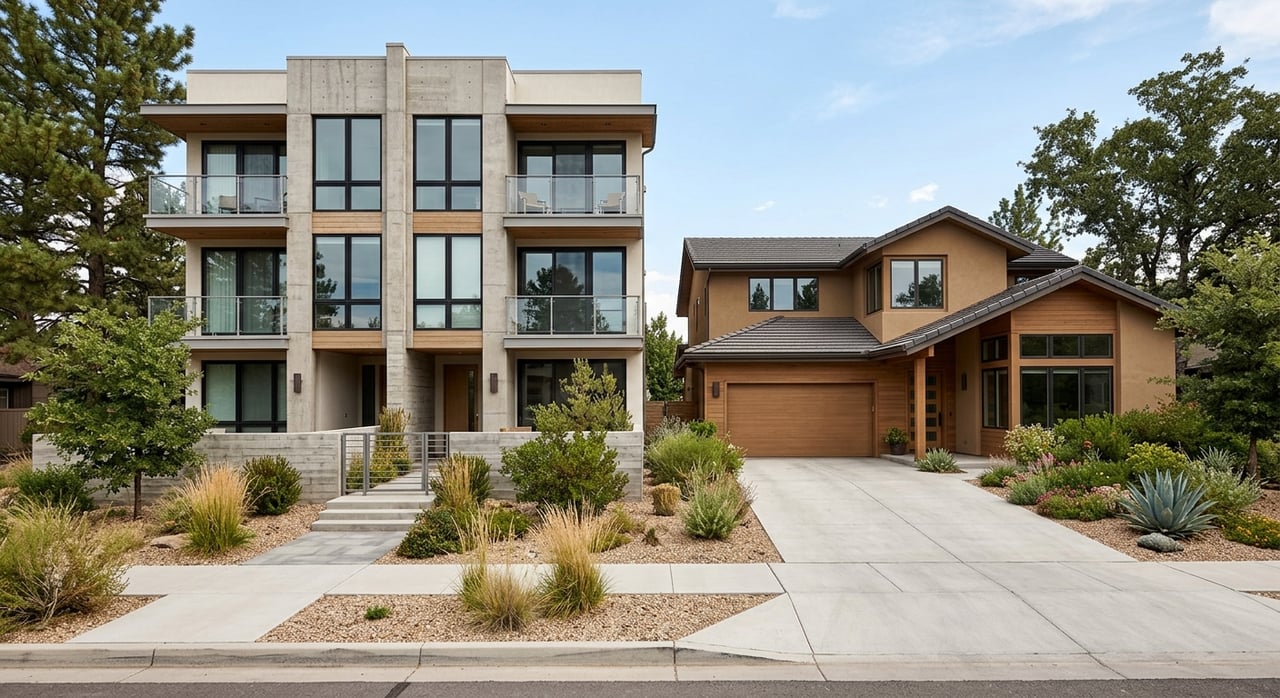
In the urban service areas that include Minden, Gardnerville, Gardnerville Ranchos, and Indian Hills, single-family homes are typically on 8,000- to 12,000-square-foot lots. Planning materials also note that townhomes, duplexes, some mobile home parks, and subdivisions may be developed in these service areas.
If you like being closer to local errands, parks, and community events, this part of Gardnerville may feel like the most convenient fit. You may also find a more traditional neighborhood pattern with infill development, urban setbacks, and a more established street layout.
Mid-Range Neighborhoods Near Gardnerville
Gardnerville Ranchos as a middle ground
For many buyers, Gardnerville Ranchos offers a useful middle option. County planning describes it as a primarily residential community in south-central Carson Valley with both urban and rural areas.
That mix matters because the housing market is described as diverse, ranging from apartment complexes to one-third-acre single-family lots and 5-acre custom-home parcels. If you want more breathing room than an in-town setting but do not want to feel far removed, this area often stands out.
Why some buyers prefer this category
Subdivision-style living can be easier to picture when you want a neighborhood setting without the tighter feel of central town blocks. In this part of the valley, neighborhood convenience can overlap with lower-density surroundings and broader valley views.
For buyers comparing multiple Carson Valley options, this middle-ground setup can be appealing because it balances access and space. You may be close to everyday destinations while still getting a quieter feel than a more central location.
Acreage Areas and Rural Character
Johnson Lane and Ruhenstroth
If your priority is elbow room, Johnson Lane and Ruhenstroth are important areas to know. Douglas County master-plan language says most of these communities fit the Single-Family Estates pattern of one- to two-acre lots, with rural services and continuing rural character.
These areas are often better suited to buyers who value open space over being in the middle of town activity. Community plans also emphasize open-space buffers and rural service levels rather than commercial development.
Larger rural-residential parcels
For even more land, county planning identifies Rural Residential areas at about 1 unit per 5 to 10 acres. These areas rely on wells and septic systems and are intended to preserve space for farm animals and horses.
The plan identifies Fish Springs, East Valley, the Chambers Field section of Gardnerville Ranchos, and Topaz Ranch Estates as typical examples. If your vision includes bigger parcels, mountain and valley views, and a more open rural setting, these areas may be worth a closer look.
Parks, Trails, and Daily Convenience
Local parks and community spaces
One reason Gardnerville appeals to a wide range of buyers is that recreation is woven into daily life. The Town of Gardnerville lists four town parks: Arbor Gardens, Heritage, Martin Slough Natural Trail, and Gardner.
The town also points to events at Heritage Park and Main Street Gardnerville. That gives in-town and nearby residents easy access to community gathering spaces without needing to travel far.
Larger regional amenities nearby
Douglas County’s Community and Senior Center on Waterloo Lane is an 83,000-square-foot facility serving seniors, adults, and youth. Lampe Park, west of US 395, is a 32-acre county park with ball fields, courts, picnic areas, and what the county calls the largest playground structure in Northern Nevada.
Ranchos Aspen Park adds another 17-acre park with sports fields, playgrounds, and paved pathways. These amenities can make a real difference when you are comparing how convenient one area feels versus another.
Errands and transportation
Everyday errands are clustered locally, which helps many buyers feel comfortable choosing Gardnerville over a larger city. DART Express serves Minden, Gardnerville, and the Gardnerville Ranchos and connects riders to destinations including Walmart, Smith’s, Raley’s, Ironwood Shopping Center, Carson Valley Medical Center, the Douglas County Community and Senior Center, Lampe Park, the Douglas County Library, Carson Valley Swim Center, and Carson Valley Inn.
The broader DART service also provides transfer points to Carson City and South Lake Tahoe. If transportation access matters to your routine, that is a useful point to keep in mind as you compare neighborhoods.
Outdoor Access Shapes the Lifestyle
Gardnerville’s setting is a major part of its draw. Douglas County highlights proximity to Lake Tahoe, Topaz Lake, the Sierra Nevada Mountains, and the Pinenut Mountains, while the Town of Gardnerville lists activities such as fishing, golf, mountain biking, skiing, snowshoeing, swimming, and theater.
The Martin Slough Trail adds another layer of convenience and outdoor access. This project added about 1.68 miles of paved pathway in 2022 and links Jake’s Wetlands in Minden to Gardnerville Elementary School, while also providing a pedestrian connection to shops, restaurants, lodgings, and other businesses off US 395.
What to Compare Before You Buy
Services can vary by address
In Douglas County, address details matter. The county notes that services may come from the county, a town, or a GID depending on the property location.
That means two homes that seem close together may not work exactly the same when it comes to service providers or utility setup. As you narrow your search, it is smart to verify how a specific property is served.
Water, sewer, and system setup
Buyers should also confirm whether water, sewer, and trash are handled centrally or through private systems. County materials indicate that some estate areas may still need centralized water and or sewer, while rural residential areas use wells and septic systems.
This is one of the biggest practical differences between in-town homes and more rural properties. It can affect maintenance, monthly costs, and how comfortable a property feels for your lifestyle.
Matching the area to your priorities
A simple checklist can help you compare Gardnerville neighborhoods more clearly:
- Do you want to be closer to Main Street, parks, and everyday errands?
- Do you prefer a neighborhood setting with a little more space?
- Are wide-open views and acreage worth a longer drive to town?
- Would you rather have centralized services, or are you comfortable with well and septic systems?
- How important is quick access to trails, regional roads, or community facilities?
When you answer those questions honestly, the right part of Gardnerville usually starts to become much clearer.
The Bottom Line on Gardnerville Neighborhoods
Gardnerville is not just one look or one lifestyle. It ranges from in-town streets near Main Street and community amenities to middle-ground neighborhoods in Gardnerville Ranchos to rural acreage areas where open space becomes a defining feature.
If you are planning a move in Carson Valley, the key is to look past the town name and focus on how each area supports your routine, space needs, and long-term goals. With deep Northern Nevada roots and a practical understanding of how neighborhood details shape a move, Sandi Striker can help you compare Gardnerville options with clarity and confidence.
FAQs
What are the main types of neighborhoods in Gardnerville, Nevada?
- Gardnerville generally offers three broad options: in-town areas near Main Street, middle-ground residential areas such as Gardnerville Ranchos, and rural or acreage properties in areas like Johnson Lane, Ruhenstroth, Fish Springs, East Valley, and Topaz Ranch Estates.
What is downtown Gardnerville like for homebuyers?
- Downtown Gardnerville is centered on Highway 395/Main Street between Gilman Avenue and Douglas Avenue and is described by county planning materials as pedestrian-oriented, with older commercial buildings mixed with contemporary buildings.
What makes Gardnerville Ranchos different from central Gardnerville?
- Gardnerville Ranchos is described by Douglas County as a primarily residential community with both urban and rural areas and a diverse housing market, making it a middle-ground option for buyers who want more space without feeling too far out.
Which Gardnerville-area communities offer larger lots?
- County planning materials say most of Johnson Lane and Ruhenstroth fit a one- to two-acre Single-Family Estates pattern, while Rural Residential areas such as Fish Springs, East Valley, Chambers Field, and Topaz Ranch Estates are typically about 1 unit per 5 to 10 acres.
What should buyers verify about services in Gardnerville neighborhoods?
- Buyers should verify whether a property is served by the Town of Gardnerville, Douglas County, or a GID, and confirm whether water, sewer, and trash are centralized or handled through private systems such as wells and septic.