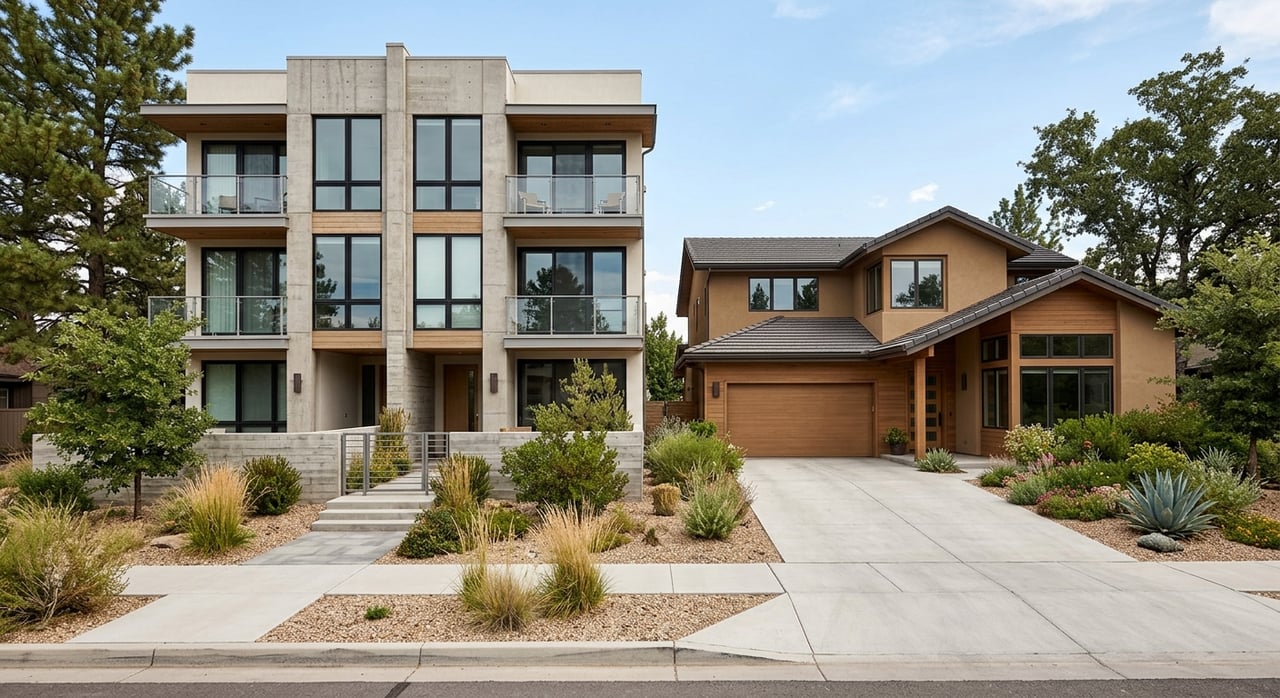
Trying to decide between a condo and a house in Reno? You are not alone, and the choice is about much more than square footage. Your budget, your monthly costs, your maintenance tolerance, and how much control you want over your property all matter. If you are weighing the pros and cons, this guide will help you compare the real tradeoffs so you can move forward with confidence. Let’s dive in.
Start With the Big Difference
A condo and a house may both give you a place to call home, but the ownership experience is not the same. In Nevada, a condo is typically part of a common-interest community, which means you own your unit while also sharing responsibility for common areas and common expenses.
That shared structure usually comes with CC&Rs, HOA rules, monthly dues, and association reserve funding. By contrast, when you buy a detached house, you generally have more direct control over the property and more direct responsibility for its upkeep.
Reno Prices Can Change the Equation
For many buyers, price is the first major factor. Current Reno market data shows a noticeable gap between condos and single-family homes, which can make one option more realistic depending on your goals and budget.
Redfin reports a median sale price of $576,359 across all Reno home types, a median single-family sale price of $634,677, and a median condo or co-op sale price of $292,889. That puts the typical single-family home about $341,788 higher than the condo or co-op median.
In simple terms, a condo may offer a lower entry point into the Reno market. A detached house may offer more space and independence, but it often comes with a much higher upfront cost.
Reno Inventory Is Still Tight
If you are hoping one property type will be dramatically easier to buy, current market conditions may not give you that shortcut. The City of Reno’s February 2026 housing memo reported 2.0 months of supply for both single-family homes and condo or townhome properties.
Redfin also reported that Reno homes were taking about 44 days to sell. That means your decision should focus less on trying to outsmart one segment of the market and more on choosing the ownership type that truly fits your finances and lifestyle.
Compare the Monthly Cost, Not Just Price
The purchase price matters, but your monthly carrying cost often tells the more important story. A lower-priced condo can still feel expensive each month if HOA dues are high, while a house with no HOA may require more repair money over time.
A useful way to compare the two is to build two sample monthly budgets, one for a condo and one for a house. Include principal and interest, property taxes, insurance, HOA fees if applicable, and a realistic maintenance amount.
Closing costs matter too. Consumer guidance cited in the research report notes that closing costs commonly run about 2% to 5% of the purchase price, so your cash needed at closing may differ quite a bit depending on the property type you choose.
Understand Washoe County Property Taxes
Property taxes are part of the monthly picture no matter which property type you buy. Washoe County says real property taxes are calculated by multiplying the current-year tax rate by assessed value, and taxes are paid in four installments during the tax year.
The county assessor also notes that Nevada’s tax cap limits annual tax increases to 3% for qualified owner-occupied residences and 8% for certain other properties. That cap does not apply to new construction or new value added, which is important to keep in mind if you are comparing newer homes or recently improved properties.
Condo Living Means Shared Costs
One of the biggest condo advantages is that some exterior and community-related responsibilities are shared through the association. Nevada guidance says owners in common-interest communities pay their share of expenses for common elements, association operations, and reserve funding.
Common elements can include landscaping, pools, fitness centers, community centers, parking areas, hallways, elevators, and mechanical rooms. If those features matter to you, HOA dues may support convenience and predictability that feels worthwhile.
But HOA dues are not optional, and they are not temporary. They are a permanent part of your ownership cost, and boards may raise assessments or levy special assessments for extraordinary expenses.
House Ownership Means More Direct Control
If you prefer to make your own decisions without association rules, a detached house may feel like the better fit. You usually have more control over maintenance timing, property use, and how the home is managed day to day.
That freedom comes with responsibility. Homeowners are typically responsible for maintenance and repairs, from smaller issues like plumbing leaks to larger expenses such as roof replacement, insurance, utilities, and emergency repairs.
For some buyers, that tradeoff is worth it. If you want more independence and are comfortable budgeting both time and money for upkeep, a house may match your priorities better.
Maintenance Is Often the Deciding Factor
Many buyers start with price, but maintenance is where the real lifestyle difference shows up. A condo often reduces the number of exterior tasks you personally manage, while a house usually places the full maintenance burden on you.
That does not mean condo ownership is maintenance-free. It means maintenance is handled differently, often through the association and funded through dues and reserves.
A house may be a better match if you do not mind repairs, yard work, and long-term upkeep planning. A condo may fit better if you want less day-to-day property management in your personal routine.
Why Condo Reserves Matter in Nevada
When you buy a condo in Reno, the financial health of the HOA matters almost as much as the unit itself. Nevada law requires associations to establish adequate reserves on a reasonable basis for the repair, replacement, and restoration of major components, and reserve studies are required at least every five years.
Those reserves are not supposed to be used for daily maintenance. If an association is underfunded, owners may face large special assessments when major repairs or replacements come due.
This is why reviewing the association budget and reserve information early is so important. A condo with low dues may not be a bargain if it is simply delaying future costs.
Insurance Works Differently for Condos
Insurance is another area where condos and houses differ in a meaningful way. Nevada Real Estate Division guidance says that for buildings with horizontal boundaries or common walls, the association’s property insurance must include damage to the unit itself, though it does not need to cover personal property or owner-made improvements and betterments.
For buyers, that means it is important to understand exactly where the association’s coverage stops and your personal responsibility begins. With a detached house, insurance is generally more straightforward because you are insuring the home directly.
Before you decide, make sure you compare not just insurance cost, but also insurance scope. That can affect both your monthly budget and your comfort level with risk.
Nevada Condo Documents Deserve a Close Read
If you are considering a condo, document review is not a formality. Nevada guidance says buyers in a common-interest community generally receive either a public offering statement or a resale package and typically have a 5-day cancellation right.
State guidance also says you should review the governing documents, annual financial statements, operating budget, monthly assessment amount, reserve amounts, and any pending judgments or lawsuits before committing. Nevada law also gives owners rights to attend meetings, speak at meetings, and inspect association records.
This is one of the clearest signs that buying a condo is not just buying a home. You are also stepping into an association structure that affects your costs, your rights, and your day-to-day ownership experience.
Watch the Risk of Unpaid HOA Dues
HOA dues should be treated as a core housing expense, not an afterthought. Nevada consumer guidance says unpaid assessments can lead to nonjudicial foreclosure, along with added penalties, costs, and attorney’s fees.
That does not mean condos are a bad choice. It means you should be realistic about the full monthly obligation before you buy.
If you are stretching to afford the mortgage and hoping the dues will somehow feel manageable later, it may be time to revisit the numbers. A comfortable payment structure matters just as much as the property itself.
A Simple Reno Decision Framework
If you are stuck between the two, start with a few honest questions about how you want to live and what you want to spend.
A condo may fit you if:
- You want a lower entry price in Reno
- You prefer less day-to-day exterior maintenance
- You are comfortable with HOA rules and monthly dues
- You value shared amenities or shared upkeep
- You are willing to review association finances carefully
A house may fit you if:
- You want more direct control over the property
- You are comfortable handling repairs and upkeep
- You want to avoid monthly HOA dues tied to common elements
- You are prepared for bigger surprise expenses over time
- You are focused on independence in how the property is managed
Questions to Ask Before You Buy a Reno Condo
If a condo is on your short list, ask for the right information early. This helps you understand whether the dues are supporting a stable association or hiding future problems.
Ask for:
- The current HOA budget
- The monthly assessment amount
- The date of the last reserve study
- Any planned or possible special assessments
- The association’s insurance details
- The resale package or disclosure materials
- Any pending judgments or lawsuits involving the association
The Best Choice Is the One That Fits Your Life
There is no universal winner in the condo-versus-house debate in Reno. The right choice depends on how you balance price, maintenance, monthly costs, risk, and personal control.
A condo can be a smart option if you want a lower price point and a more shared ownership structure. A house can be the better fit if you want more independence and are ready for the responsibilities that come with it.
If you want help comparing options in Reno and making sense of the numbers, local guidance can make the process much clearer. Sandi Striker brings deep Northern Nevada roots, decades of experience, and practical insight to help you choose the property type that truly fits your goals.
FAQs
What is the main difference between buying a condo and a house in Reno?
- In Reno, a condo usually means ownership within a common-interest community with HOA rules, dues, and shared common expenses, while a detached house usually means more direct control and more direct responsibility for maintenance.
Are condos cheaper than houses in Reno?
- Current Reno market data in the research report shows a lower median sale price for condo or co-op properties than for single-family homes, which can make condos a lower entry-price option for many buyers.
What HOA documents should Reno condo buyers review?
- Nevada guidance says condo buyers should review the governing documents, annual financial statements, operating budget, monthly assessment amount, reserve amounts, and any pending judgments or lawsuits.
How do property taxes work for Reno homes in Washoe County?
- Washoe County says real property taxes are based on the current-year tax rate multiplied by assessed value, and those taxes are paid in four installments during the tax year.
Why do reserve funds matter when buying a Reno condo?
- Nevada law requires associations to maintain reserves for major repair and replacement needs, and weak reserves can increase the chance of special assessments for owners.
Is condo insurance different from house insurance in Nevada?
- Yes. Nevada guidance says condo associations may insure damage to the unit itself in certain building types, but that coverage may not include personal property or owner improvements, so buyers need to understand the coverage boundaries clearly.